
E-Commerce: Complete Guide is designed to help beginners, business owners, students, and aspiring online sellers understand how e-commerce works and how to build a successful online business. From creating an online store and choosing products to accepting payments, managing orders, and promoting your brand, e-commerce has changed the way people buy and sell products and services.
Today, customers can shop from their smartphones, compare prices, read reviews, and place orders within minutes. For businesses, e-commerce provides an opportunity to reach customers beyond their local area and operate online with flexible business models.
In this E-Commerce: Complete Guide, we will explore the meaning of e-commerce, its types, benefits, working process, business models, essential steps to start an online store, marketing strategies, challenges, and frequently asked questions.
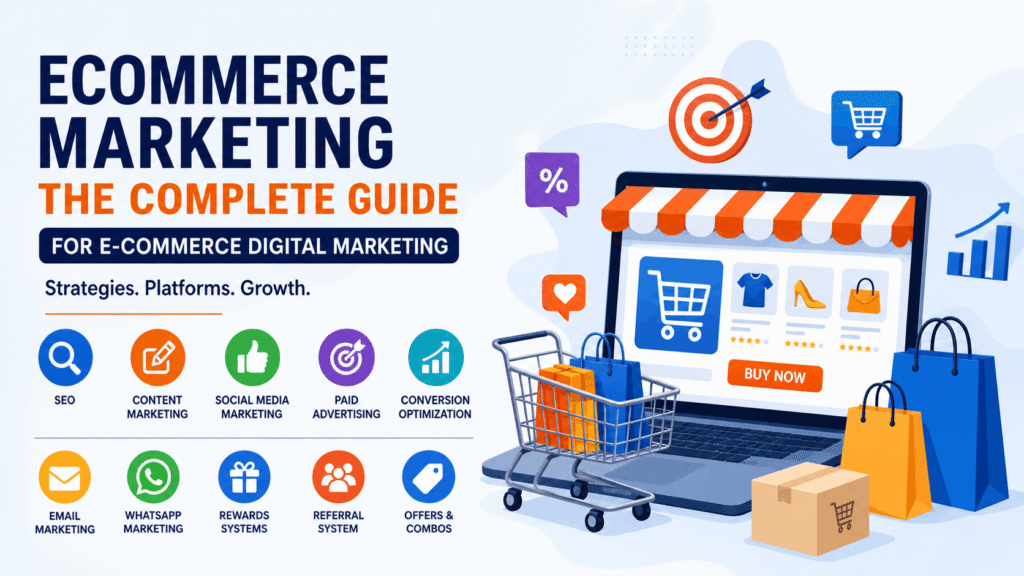
What Is E-Commerce?
E-commerce, short for electronic commerce, refers to buying and selling products or services through the internet. Instead of visiting a physical shop, customers can browse products online, compare prices, place orders, make payments, and receive their purchases at home.
E-commerce can involve physical products, digital products, subscriptions, services, and even online consultations.
For example, when a customer purchases clothes from an online store, orders groceries through an app, or buys an ebook from a website, the transaction is part of e-commerce.
Table of Contents
How Does E-Commerce Work?
An e-commerce transaction usually follows a simple process:
- A customer visits an online store or marketplace.
- The customer searches for a product or service.
- Product information, images, prices, and reviews are checked.
- The customer adds the product to the shopping cart.
- Payment and delivery details are entered.
- The order is confirmed.
- The seller processes and packs the order.
- A delivery partner delivers the product.
- The customer receives the order.
Behind this simple process, several systems work together, including websites, payment gateways, inventory management, order processing, customer support, and logistics.
Types of E-Commerce
There are different types of e-commerce depending on who is buying and selling.
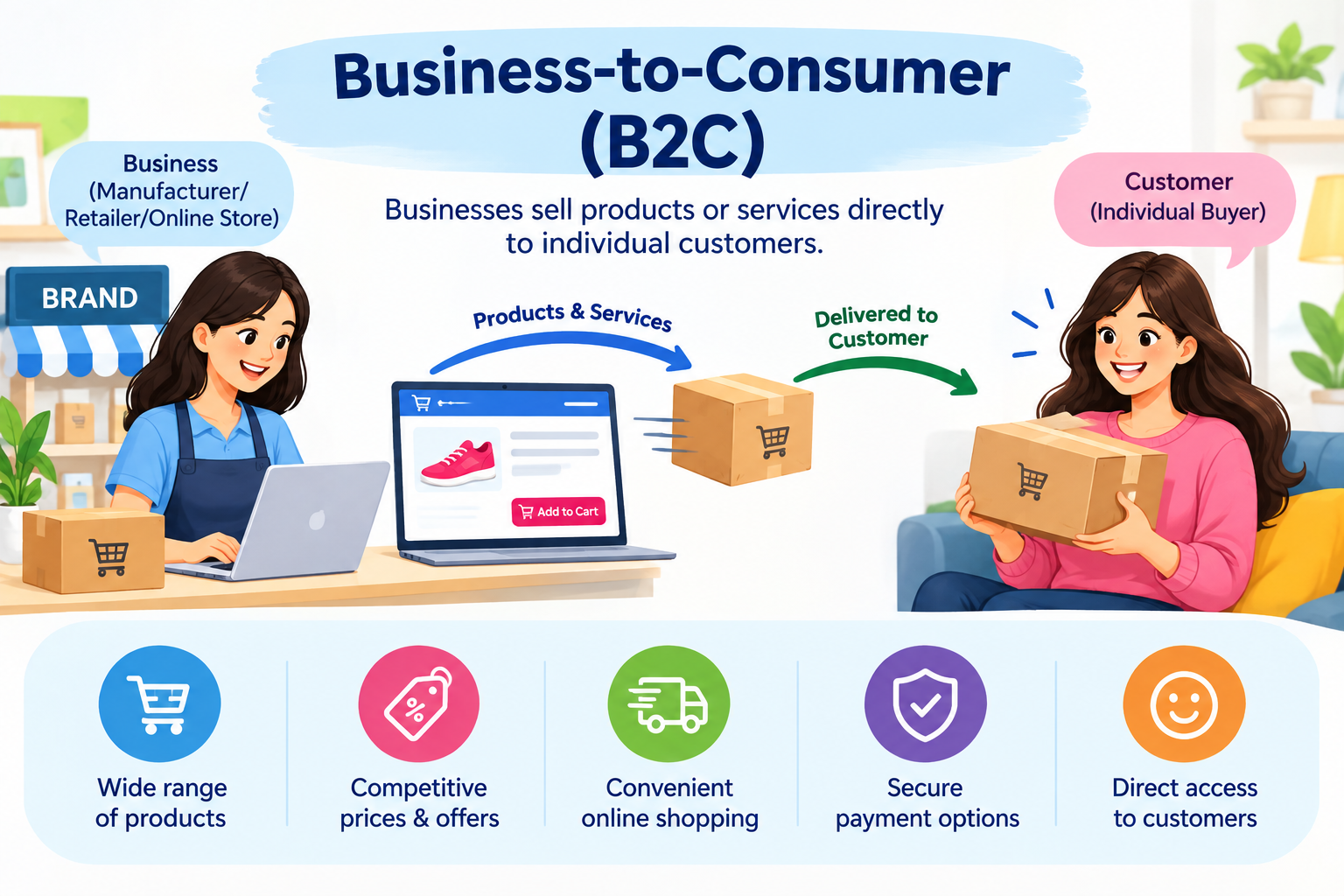
1. Business-to-Consumer (B2C)
B2C is one of the most common forms of e-commerce. In this model, businesses sell products or services directly to individual customers.
For example, an online clothing store selling dresses to customers operates under the B2C model.
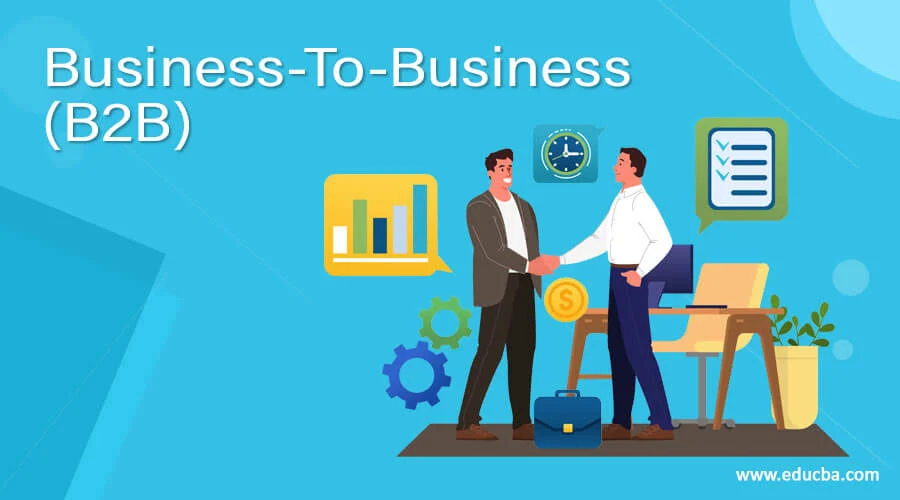
2. Business-to-Business (B2B)
B2B e-commerce involves transactions between businesses. A manufacturer may sell products in bulk to wholesalers, retailers, or other companies through an online platform.
B2B transactions often involve larger quantities and long-term business relationships.
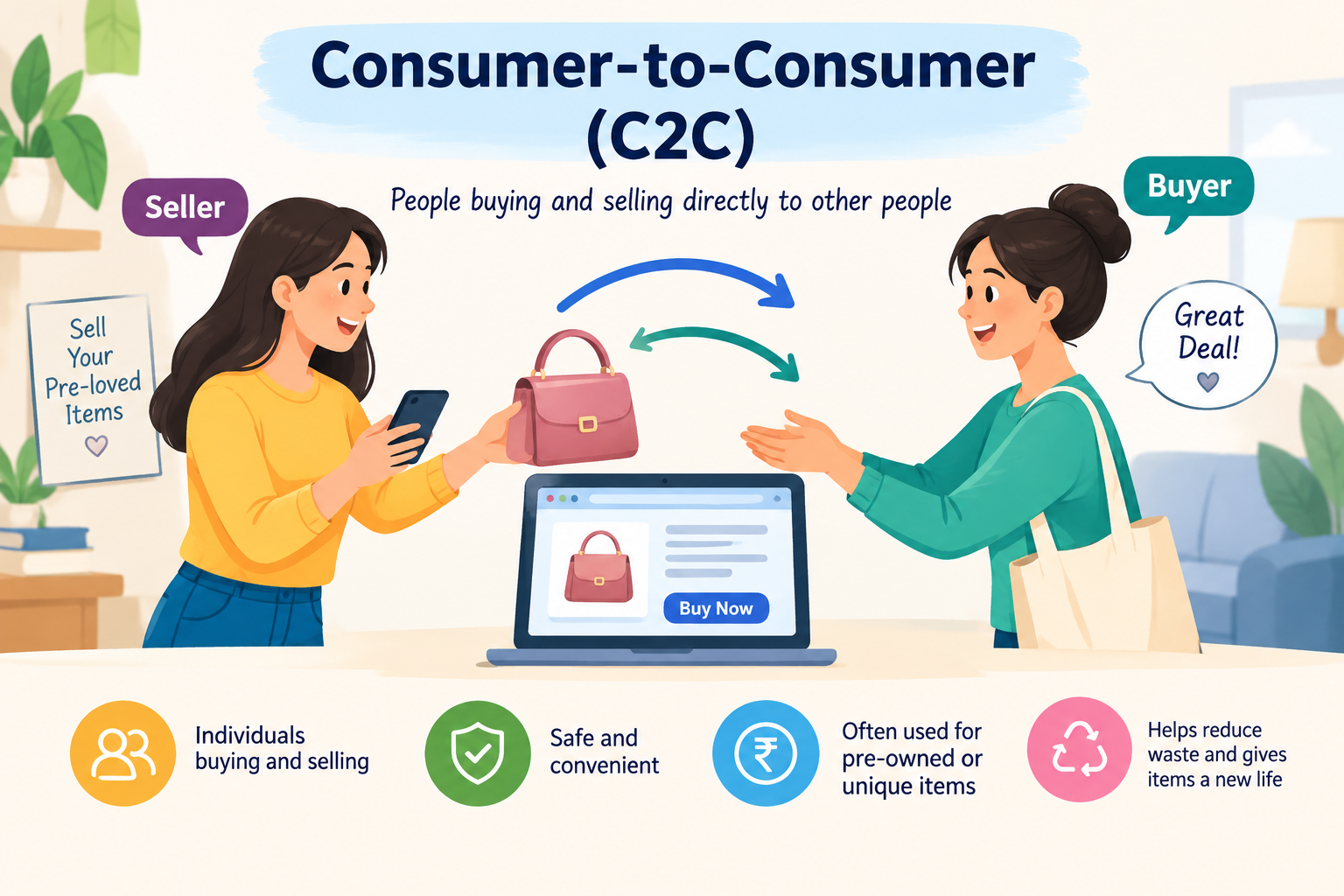
3. Consumer-to-Consumer (C2C)
C2C e-commerce allows individuals to sell products or services to other individuals. Online resale platforms and classified websites commonly use this model.
For example, a person selling a used mobile phone to another person through an online marketplace is participating in C2C e-commerce.
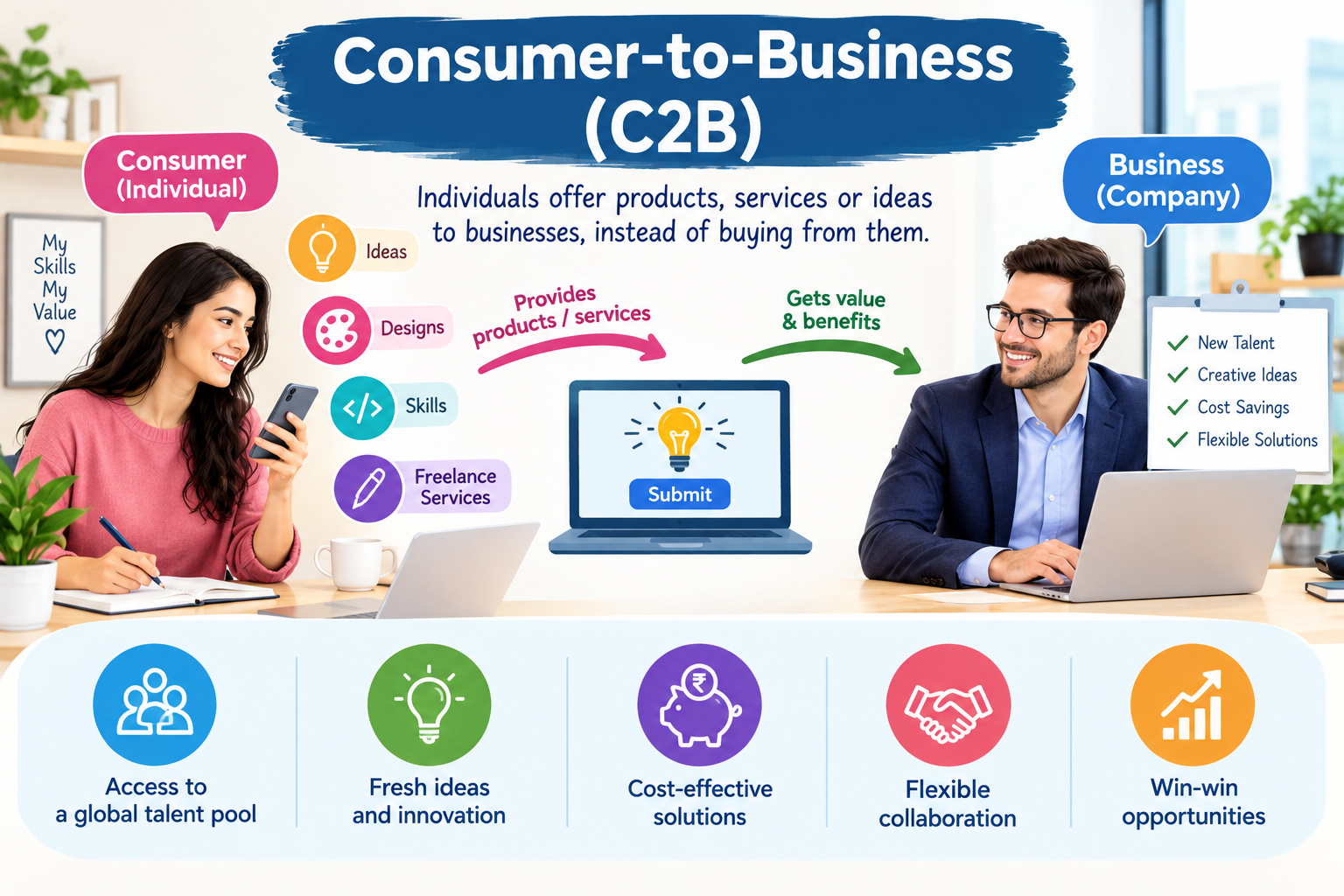
4. Consumer-to-Business (C2B)
In the C2B model, individuals offer products or services to businesses. Freelancers, photographers, designers, and content creators can operate under this model.
For instance, a freelance designer providing logo design services to a company is an example of C2B commerce.
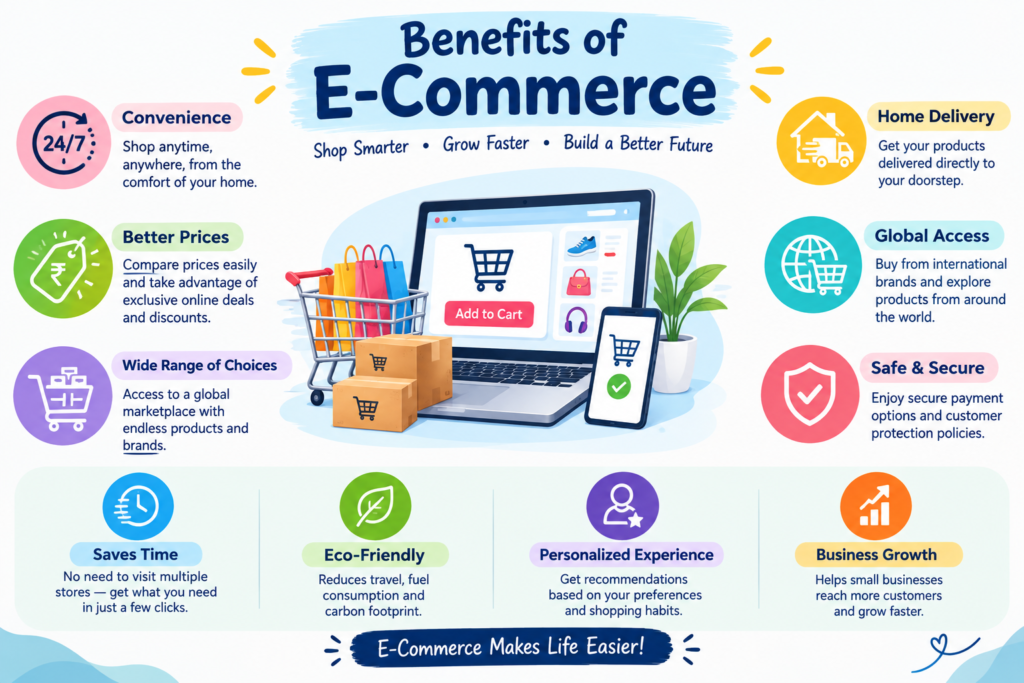
Benefits of E-Commerce
The popularity of e-commerce comes from the convenience it provides to both customers and businesses.
1. Wider Customer Reach
A physical shop is usually limited by its location. An online store can reach customers from different cities, states, and even countries.
This wider reach gives small businesses an opportunity to find customers outside their local area.
2. 24/7 Availability
An online store does not need to close at night. Customers can browse products and place orders whenever they want.
This makes e-commerce convenient for people with different schedules.
3. Lower Operating Costs
Starting an online business can sometimes require less investment than opening a traditional retail store. Businesses may reduce expenses related to physical space, utilities, and certain operational costs.
However, online businesses still need to budget for marketing, technology, packaging, shipping, inventory, and customer service.
4. Easy Product Comparison
Online shoppers can compare prices, features, ratings, reviews, and different brands before making a purchase.
This makes product information more accessible and helps customers make informed decisions.
5. Personalized Shopping Experience
E-commerce platforms can use customer behavior and preferences to provide relevant product recommendations.
For example, a customer who frequently searches for skincare products may see recommendations related to skincare.
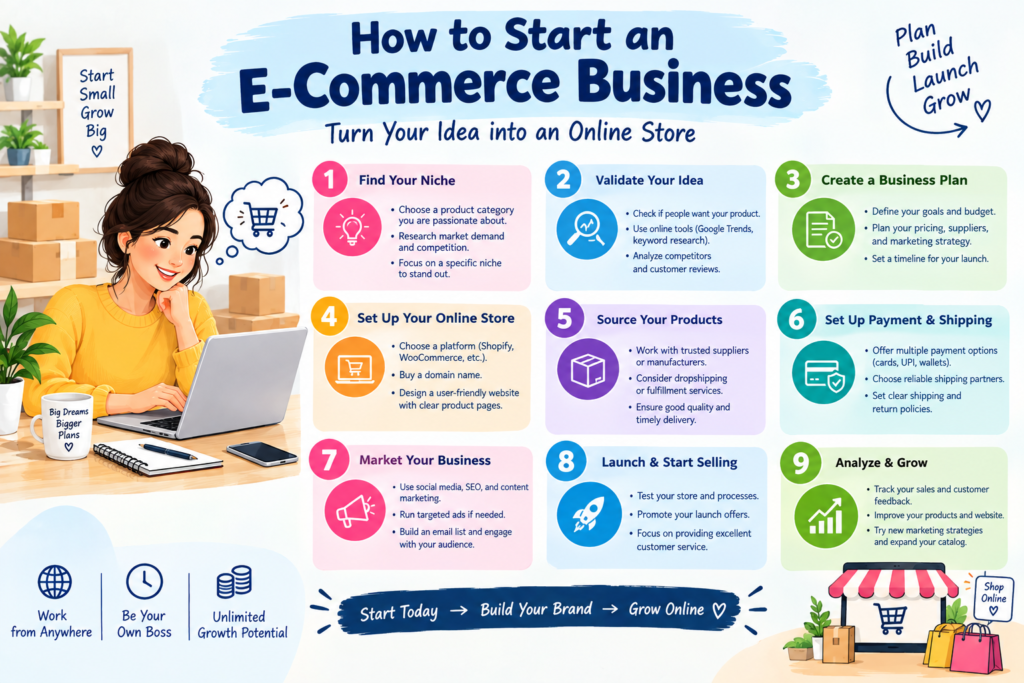
How to Start an E-Commerce Business
Starting an e-commerce business does not necessarily require a large team. With proper planning, even beginners can start small and gradually expand.
Step 1: Choose a Product
The first step is deciding what you want to sell.
You can consider categories such as:
- Clothing and fashion accessories
- Beauty and personal care
- Home and kitchen products
- Food and spices
- Fitness products
- Handmade products
- Digital products
- Educational resources
Choose a product that has customer demand and gives you enough margin after considering packaging, shipping, marketing, taxes, and marketplace fees.
Step 2: Research Your Target Audience
Knowing your customer is essential for e-commerce success.
Ask questions such as:
- Who needs this product?
- What problem does it solve?
- What price are customers comfortable paying?
- Where do potential customers shop online?
- What factors influence their buying decision?
The answers can help you create better product listings and marketing campaigns.
Step 3: Select a Selling Platform
You can sell through your own website, online marketplaces, social media, or a combination of these channels.
A marketplace can provide access to an existing customer base, while your own website gives you more control over branding and customer experience.
Step 4: Create High-Quality Product Listings
A product listing is one of the most important parts of an online store.
Use clear product images and provide accurate information about:
- Product name
- Features
- Size or quantity
- Materials or ingredients
- Benefits
- Price
- Shipping information
- Return policy
Avoid making unrealistic claims. Honest product information helps build customer trust.
Step 5: Set Up Payments and Delivery
Customers should have convenient payment options. Depending on your market and platform, you may offer online payments, cards, digital wallets, or cash on delivery.
You also need a reliable delivery system. Fast and dependable shipping can significantly influence customer satisfaction.
How to Increase E-Commerce Sales
Getting your online store ready is only the beginning. The next challenge is attracting visitors and converting them into customers.
Improve Your Product Pages
Use attractive images, clear descriptions, simple pricing information, and customer reviews.
Your product page should quickly answer the customer’s most important questions.
Use Search Engine Optimization
SEO can help your e-commerce website appear when people search for products online.
Use relevant keywords naturally in:
- Product titles
- Product descriptions
- Headings
- Image alt text
- Blog articles
- Category pages
- Meta titles and descriptions
Do not overuse keywords. Search engines and customers both prefer useful, readable content.
Build a Social Media Presence
Social media can help e-commerce businesses introduce products to new audiences.
You can share:
- Product demonstrations
- Customer reviews
- Tutorials
- Before-and-after content where appropriate
- Behind-the-scenes videos
- Offers and seasonal campaigns
Short-form videos can be particularly useful for demonstrating how a product works.
Encourage Customer Reviews
Reviews can influence purchasing decisions because new customers often want to know what previous buyers think.
After a successful purchase, encourage customers to leave honest feedback.
Offer Excellent Customer Service
Good customer service can turn a first-time buyer into a repeat customer.
Respond to questions quickly, communicate delivery updates, and handle complaints professionally.
Common Challenges in E-Commerce
Although e-commerce provides many opportunities, it also has challenges.
Strong Competition
Customers have access to many sellers offering similar products. Therefore, businesses need to differentiate themselves through product quality, branding, pricing, customer service, or a unique shopping experience.
Delivery Problems
Late deliveries, damaged packages, or incorrect orders can affect customer satisfaction.
Choosing suitable packaging and reliable logistics partners can help reduce these problems.
Customer Trust
Some customers may hesitate to purchase from a new online store. Professional product images, transparent policies, secure payment options, contact information, and genuine reviews can help build trust.
Managing Inventory
Too much inventory can block your money, while too little stock can lead to missed sales.
Keeping track of inventory and sales trends can help you maintain a healthier stock level.
Future of E-Commerce
The future of e-commerce is expected to become increasingly connected with mobile shopping, artificial intelligence, social commerce, personalized recommendations, and faster delivery.
Customers are also becoming more selective. They do not simply look for the lowest price; they may consider product quality, reviews, packaging, brand reputation, convenience, and customer service.
For small businesses, this creates both opportunities and challenges. Businesses that understand their customers and continuously improve their online shopping experience can build stronger relationships and long-term growth
What is e-commerce in simple words?
E-commerce means buying and selling products or services over the internet. Customers can discover products, place orders, make payments, and receive products without visiting a traditional store.
Is e-commerce a good business opportunity?
Yes, e-commerce can be a good business opportunity when a seller chooses the right product, understands the target audience, manages costs, and provides a good customer experience. Success is not guaranteed, so proper research and planning are important.
How much money is needed to start an e-commerce business?
The investment depends on the business model. A small seller may start with limited inventory and basic packaging, while a larger brand may need significant investment in inventory, technology, advertising, employees, and logistics.
Can beginners start an e-commerce business?
Yes. Beginners can start with a small product range and gradually expand. Learning about product research, pricing, marketing, customer service, and order management can make the process easier.
What products can be sold through e-commerce?
Almost any legally permitted product can potentially be sold online, including clothing, beauty products, home goods, food products, accessories, electronics, handmade products, and digital products. Certain categories may require specific licenses or compliance requirements.
Is an e-commerce website necessary?
No. Businesses can start through online marketplaces or social media. However, having your own website can give you greater control over branding, customer experience, and online presence.
Conclusion
E-commerce has created new opportunities for entrepreneurs, small businesses, established brands, and customers. With an online store, businesses can reach a larger audience, operate beyond traditional shopping hours, and build a strong digital presence.
However, successful e-commerce is about more than simply listing products online. Sellers need to understand their customers, select the right products, create trustworthy listings, manage inventory, provide reliable delivery, and invest in effective marketing.
If you are planning to start an e-commerce business, begin with a simple strategy. Research your market, choose a suitable product, understand your customers, start with a manageable budget, and improve your business based on customer feedback. With consistency and smart planning, e-commerce can become a valuable channel for long-term business growth.