
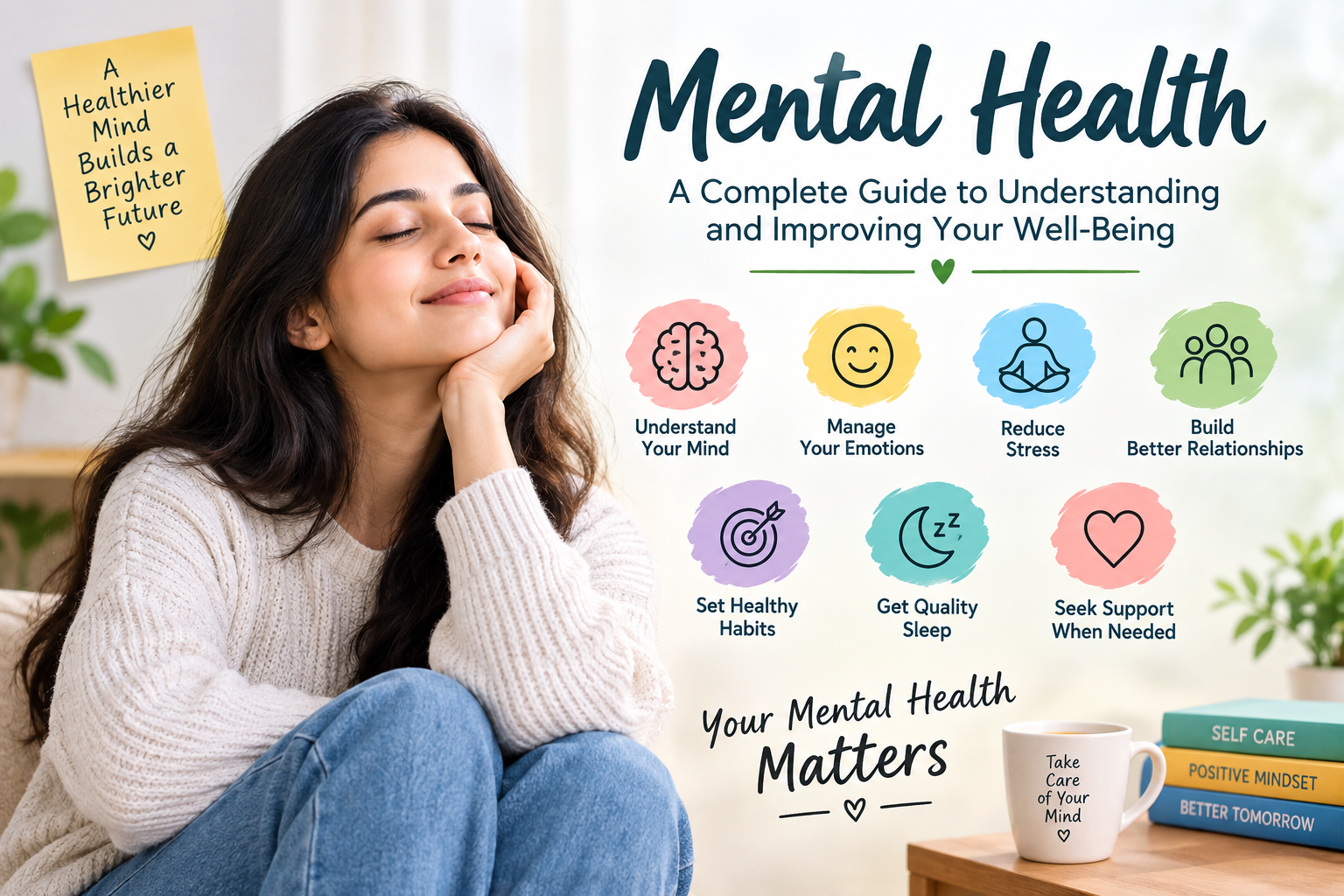
Mental Health: A Complete Guide to Well-Being is essential for understanding how our thoughts, emotions, and behaviors influence everyday life. Mental health is not only about the absence of mental illness. It is also about feeling emotionally balanced, handling stress, maintaining relationships, making healthy decisions, and being able to enjoy life.
In today’s busy world, people often focus on physical health while ignoring their emotional and psychological well-being. Work pressure, financial concerns, relationship problems, social media, lack of sleep, and major life changes can all affect mental health. Learning how to recognize these challenges and take care of your well-being can make an important difference.
This guide explains what mental health means, why it matters, common warning signs, factors that influence it, practical ways to support mental well-being, and when professional support may be helpful.
Table of Contents
What Is Mental Health?
Mental health refers to our emotional, psychological, and social well-being. It affects the way we think, feel, behave, communicate, manage stress, and respond to different situations.
Good mental health does not mean feeling happy all the time. Everyone experiences sadness, anger, worry, disappointment, or stress. Healthy mental well-being means being able to experience these emotions and gradually cope with them in constructive ways.
Mental health can change throughout life. A person may feel emotionally strong during one period and struggle during another. Asking for support when things become difficult is a normal part of taking care of yourself.
Why Is Mental Health Important?
Mental health plays a major role in almost every area of life. When your mental well-being is supported, it can become easier to concentrate, communicate with others, solve problems, and handle everyday responsibilities.
Mental Health and Physical Health
Mental and physical health are closely connected. Poor sleep, prolonged stress, inactivity, and unhealthy habits can affect emotional well-being. Similarly, ongoing emotional difficulties may make it harder to maintain healthy physical routines.
Taking care of both areas can therefore support overall well-being.
Mental Health and Relationships
Our emotional state can influence how we interact with family members, friends, colleagues, and partners. When people are overwhelmed or constantly stressed, they may become withdrawn, irritable, or less communicative.
Healthy communication, boundaries, empathy, and supportive relationships can contribute positively to mental well-being.
Mental Health and Productivity
Mental well-being can also affect concentration, motivation, creativity, and decision-making. Taking regular breaks and managing stress can help people approach work and studies with greater clarity.
Common Signs of Poor Mental Health
Mental health difficulties can appear differently from person to person. Some signs may be temporary responses to stressful events, while persistent or severe changes may require professional attention.
Common signs can include:
- Feeling sad, hopeless, or overwhelmed for long periods
- Excessive worry or constant nervousness
- Losing interest in activities you normally enjoy
- Major changes in sleeping habits
- Significant changes in appetite
- Difficulty concentrating or making decisions
- Feeling unusually tired or lacking motivation
- Avoiding friends, family, or social activities
- Frequent anger or irritability
- Feeling worthless or excessively guilty
- Finding everyday responsibilities difficult to manage
One symptom by itself does not necessarily indicate a mental health condition. However, noticeable changes that persist or interfere with daily life deserve attention.
Factors That Can Affect Mental Health
Mental health is influenced by many different factors rather than one single cause.
Lifestyle Factors
Daily habits can have an important impact on emotional well-being. Poor sleep, inactivity, excessive screen time, an unbalanced diet, and ongoing work pressure may contribute to stress.
Building realistic healthy habits can provide a stronger foundation for mental well-being.
Life Experiences
Major life events such as losing a loved one, changing jobs, financial difficulties, moving to a new place, relationship problems, or academic pressure can affect mental health.
Even positive changes, such as marriage, starting a new career, or becoming a parent, can sometimes bring stress and adjustment challenges.
Social Environment
The people and environment around us can influence how we feel. Supportive relationships can provide comfort and encouragement, while loneliness, conflict, bullying, discrimination, or social isolation can negatively affect well-being.
Biological and Genetic Factors
Biological factors, including genetics, brain chemistry, physical health, and hormonal changes, can also influence mental health. This is one reason mental health challenges should not be viewed simply as a lack of willpower.
How to Improve Mental Well-Being
Supporting mental health does not always require making huge changes. Small, consistent actions can help build healthier routines.
Get Enough Sleep
Sleep gives the body and mind time to recover. Try to maintain a regular sleep schedule and create a relaxing bedtime routine.
Reducing screen use before bedtime, keeping the sleeping environment comfortable, and avoiding excessive caffeine late in the day may also help.

Stay Physically Active
Physical activity can support both physical and emotional well-being. You do not necessarily need an intense workout routine. Walking, stretching, dancing, cycling, yoga, or other enjoyable activities can be useful ways to stay active.
The most effective activity is often one that you can maintain consistently.

Eat a Balanced Diet
Food provides the nutrients the body needs to function properly. A balanced eating pattern that includes vegetables, fruits, whole grains, protein sources, and adequate fluids can support general health.
Avoid treating food as a substitute for professional mental health care when serious symptoms are present.

Stay Connected
Talking with someone you trust can make difficult situations feel less isolating. Friends, family members, teachers, colleagues, or community groups may provide emotional support.
You do not have to discuss everything at once. Even a simple conversation can be a positive first step.
Practice Stress Management
Stress is a normal part of life, but constant stress can become difficult to manage. Consider activities such as:
- Deep breathing
- Meditation
- Journaling
- Walking outdoors
- Listening to music
- Reading
- Spending time with supportive people
- Taking short breaks during work
- Practicing hobbies
The goal is not to eliminate every stressful situation but to develop healthier ways of responding to stress.

Set Healthy Boundaries
Learning to say no when necessary can protect your time and energy. Healthy boundaries may involve limiting unnecessary commitments, communicating your needs clearly, or reducing contact with situations that repeatedly create distress.
Boundaries are not about controlling other people. They are about deciding what you can reasonably accept and manage.

Mental Health and Social Media
Social media can help people stay connected, discover useful information, and express themselves. However, excessive use can sometimes contribute to comparison, information overload, sleep disruption, or feelings of inadequacy.
If social media is affecting your mood, consider taking regular breaks. Unfollowing accounts that consistently make you feel negative and spending more time on meaningful offline activities may also help.
Remember that social media usually presents selected moments rather than someone’s complete life.

When Should You Seek Professional Help?
Seeking professional support is a sign of taking your well-being seriously. Consider speaking with a qualified mental health professional if emotional or psychological difficulties:
- Continue for an extended period
- Become difficult to manage
- Interfere with work, studies, relationships, or daily activities
- Cause significant distress
- Lead you to withdraw from people or activities
- Make it difficult to care for yourself
Mental health professionals may include psychologists, psychiatrists, counselors, therapists, and other qualified providers. The appropriate professional depends on the person’s needs.
If you are experiencing thoughts of suicide, self-harm, or immediate danger, seek urgent help from local emergency services or a crisis service and stay with someone you trust if possible.
Mental Health Myths and Facts
Myth: Mental health problems are a sign of weakness.
Fact: Mental health difficulties can affect anyone. Experiencing emotional struggles does not mean someone lacks strength or character.
Myth: Talking about mental health makes problems worse.
Fact: A supportive and respectful conversation can help someone feel heard and less alone.
Myth: You should handle everything by yourself.
Fact: Social and professional support can be an important part of managing difficult periods.
Myth: Mental health is only about mental illness.
Fact: Mental health includes everyday emotional well-being, resilience, relationships, coping skills, and the ability to function in daily life.
Simple Daily Mental Health Routine
A practical daily routine can make mental well-being easier to prioritize.
Morning: Start the day with water, a nutritious breakfast, light movement, and a few minutes without immediately checking social media.
During the day: Take short breaks, stay connected with others, complete tasks one at a time, and avoid unnecessary multitasking.
Evening: Spend some time doing an enjoyable activity, reduce excessive screen use, reflect on the positive parts of your day, and prepare for adequate sleep.
You do not need to follow a perfect routine. Consistency is more important than perfection.
1. What is mental health?
Mental health is a person’s emotional, psychological, and social well-being. It influences thoughts, feelings, behavior, relationships, decision-making, and the ability to cope with everyday challenges.
2. Why is mental health important?
Mental health affects how people manage stress, communicate, work, study, build relationships, and handle everyday responsibilities. Supporting mental well-being can contribute to a healthier and more balanced life.
3. What are common signs of poor mental health?
Common signs include persistent sadness, excessive worry, social withdrawal, changes in sleep or appetite, low motivation, difficulty concentrating, irritability, and loss of interest in activities.
4. How can I improve my mental health naturally?
Healthy habits such as regular physical activity, sufficient sleep, balanced nutrition, meaningful social connections, relaxation techniques, hobbies, and stress management can support mental well-being.
5. Can mental health change over time?
Yes. Mental health can change because of life experiences, stress, relationships, physical health, environment, and other factors. Someone can experience difficult periods and later regain better emotional balance with appropriate support.
6. When should I talk to a mental health professional?
Consider professional support when emotional difficulties persist, become overwhelming, interfere with daily activities, or significantly affect relationships, work, studies, or self-care.
Conclusion
Mental Health: A Complete Guide to Well-Being highlights an important message: mental health deserves the same attention and care as physical health. Emotional struggles are a normal part of being human, and asking for help should never be considered a weakness.
Simple habits such as getting enough sleep, staying physically active, eating a balanced diet, maintaining supportive relationships, managing stress, and setting healthy boundaries can contribute to better mental well-being.
At the same time, self-care is not a replacement for professional treatment when someone is experiencing serious or persistent difficulties. Recognizing warning signs and seeking appropriate support can be an important step toward recovery and a healthier life.
Taking care of your mental health is not a one-time task. It is an ongoing process of understanding yourself, caring for your needs, building healthy connections, and getting support when you need it.