
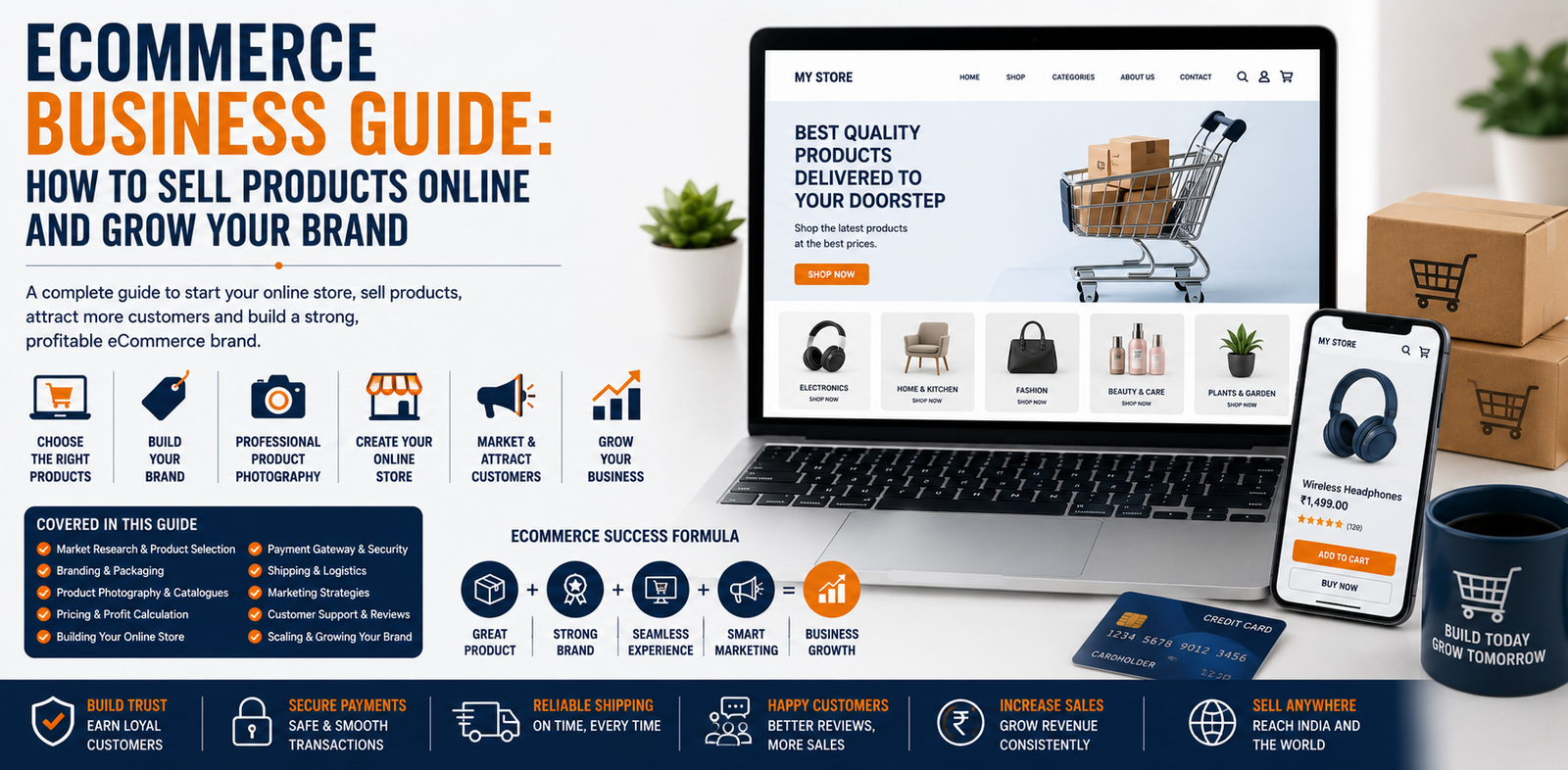
Starting an online business is exciting, but the single biggest factor that determines success or failure is product selection. If you want to build a sustainable e-commerce brand, learning how to find profitable products to sell online isn’t optional — it’s the foundation everything else is built on. In this guide, you’ll learn practical, proven methods to identify profitable products, validate demand, and avoid the common mistakes that sink new sellers before they even launch.
Whether you’re planning to sell on Amazon, Shopify, Etsy, or a dropshipping store, the process of finding profitable products to sell online follows the same core principles: identify demand, check competition, calculate margins, and validate before you invest.

Table of Contents
Why Product Research Matters More Than You Think
Many new entrepreneurs jump straight into building a store without doing proper research. They pick a product because they personally like it, not because data supports it. This is one of the most common — and costly — mistakes in e-commerce.
Finding profitable products to sell online requires you to separate emotion from strategy. A product might be trendy on social media today and completely irrelevant in three months. Others might have low visibility but consistent, evergreen demand year-round. The goal of product research is to find items with:
- Strong and consistent demand
- Manageable competition
- Healthy profit margins
- Low return/refund rates
- Room for branding or differentiation
If you get these five factors right, you dramatically increase your odds of building a profitable online business.
How to Find Profitable Products to Sell Online: Step-by-Step
1. Start With Market Research, Not Product Ideas
Before you fall in love with a product idea, study the market. Use tools like Google Trends, Ahrefs, SEMrush, or even free platforms like Amazon’s Movers & Shakers list to see what’s gaining traction. Look for categories with rising search volume over the past 6–12 months rather than short-lived spikes.
A smart approach is to look at seasonal versus evergreen demand. Evergreen products (fitness gear, home organization, pet supplies) tend to be more stable long-term, while seasonal products (holiday decor, summer gadgets) can generate quick profit but require precise timing.
2. Use Online Marketplaces as Research Tools
Marketplaces like Amazon, eBay, Etsy, and AliExpress are goldmines of free data. Here’s how to use them effectively:
- Amazon Best Sellers Rank (BSR): A lower BSR number means higher sales volume in that category.
- Customer reviews: Read the negative reviews of top-selling products in your niche — they reveal gaps you can fill with a better version.
- “Customers also bought” sections: These reveal complementary products and bundling opportunities.
This kind of hands-on research is one of the fastest ways to find profitable products to sell online without spending money on paid tools.
3. Analyze Search Volume and Keyword Demand
Keyword research isn’t just for content marketing — it’s essential for product research too. Use tools like Google Keyword Planner, Ubersuggest, or Helium 10 (for Amazon sellers) to check:
- Monthly search volume for the product name
- Related long-tail keywords
- Buyer intent (are people searching to buy, or just to learn?)
A product with high search volume and strong buyer intent keywords is a strong signal of real market demand.
4. Study Your Competitors Closely
Competitor analysis tells you what’s already working — and where the gaps are. Look at:
- Pricing structures and profit margins
- Product photography and branding quality
- Customer complaints in reviews
- Ad strategies (check their Facebook Ads Library or Google Ads presence)
If a niche has zero competition, that’s often a red flag that there’s no real demand. If it has heavy competition but poor product quality or customer service, that’s an opportunity for you to do it better.
5. Validate Demand Before You Invest
Never buy inventory or commit to a supplier before validating demand. Some low-cost validation methods include:
- Running a small Facebook or TikTok ad campaign to a landing page
- Pre-selling the product with a “coming soon” waitlist
- Testing on marketplaces like Etsy or eBay before building a full store
- Posting in relevant online communities or forums to gauge interest
Validation reduces risk significantly and prevents you from sinking money into a product nobody wants.
6. Calculate Real Profit Margins
A product can be popular and still be unprofitable if you don’t account for all costs. When learning how to find profitable products to sell online, always calculate:
- Product cost (manufacturing or wholesale price)
- Shipping and fulfillment costs
- Platform fees (Amazon, Shopify, PayPal, etc.)
- Marketing and advertising spend
- Returns and refunds
A good rule of thumb for most online sellers is to aim for at least a 30–50% profit margin after all costs, though this varies by industry.
7. Look for Products With Branding Potential
Generic, low-differentiation products are harder to scale profitably because they compete purely on price. Products with branding potential — where you can add unique packaging, bundle features, or build a story around them — tend to command higher margins and better customer loyalty.
Ask yourself: Can I improve this product? Can I bundle it with something else? Can I create a stronger brand identity around it than my competitors have?
Best Tools for Finding Profitable Products to Sell Online
| Tool | Best For |
|---|---|
| Google Trends | Spotting rising and seasonal trends |
| Jungle Scout / Helium 10 | Amazon product and keyword research |
| SaleHoo / Spocket | Finding reliable suppliers |
| Google Keyword Planner | Search volume and keyword demand |
| Facebook Ads Library | Competitor ad research |
| AliExpress Dropshipping Center | Trending dropship product data |
Using a combination of free and paid tools gives you a more complete, data-backed picture rather than relying on guesswork.
Common Mistakes to Avoid When Choosing Products
- Chasing trends without a long-term plan: Viral products can crash as fast as they rise.
- Ignoring shipping costs and weight: Bulky or fragile items can eat your margins.
- Skipping supplier vetting: Poor quality control leads to refunds and bad reviews.
- Choosing oversaturated niches with no differentiation: You’ll compete purely on price.
- Not testing before scaling: Always validate with small ad spend before going all-in.
Avoiding these mistakes is just as important as the research itself when it comes to finding profitable products to sell online.
Conclusion
Learning how to find profitable products to sell online isn’t about luck — it’s about combining data, research, and validation before committing your time and money. Start by studying market trends, dig into marketplace data, analyze your competitors, and validate demand with small, low-risk tests. Calculate your real profit margins honestly, and look for products where you can add branding value rather than competing on price alone.
The sellers who succeed long-term aren’t the ones who pick the flashiest product — they’re the ones who follow a repeatable, data-driven process. Apply the steps in this guide consistently, and you’ll be far better equipped to find profitable products to sell online and build a business that lasts.
Frequently Asked Questions (FAQs)
1. What is the easiest way to find profitable products to sell online?
The easiest way is to combine marketplace research (Amazon Best Sellers, Etsy trending items) with keyword tools like Google Trends to confirm real demand before committing to a product.
2. How do I know if a product will be profitable?
Calculate all costs — product, shipping, fees, marketing, and returns — then compare that to your expected selling price. A healthy margin, strong demand, and manageable competition are all good signs of profitability.
3. Should I sell trending products or evergreen products?
Both have value. Trending products can generate fast sales but carry more risk, while evergreen products offer more stability. Many successful sellers use a mix of both.
4. How much competition is too much when choosing a product?
Heavy competition isn’t automatically bad — it usually confirms demand. The key is finding a way to differentiate through branding, quality, pricing, or customer experience rather than avoiding competitive niches entirely.
5. What tools do I need to research profitable products?
At minimum, use Google Trends for demand, a marketplace (Amazon/Etsy/eBay) for real sales data, and a keyword tool for search volume. Paid tools like Jungle Scout or Helium 10 can add deeper insights as you scale.
6. Can I find profitable products without paid tools?
Yes. Many sellers successfully use free resources like Amazon Best Seller rankings, Google Trends, social media trend-spotting, and customer reviews to identify winning products without spending on software.